
Why everyone is suddenly fly Kyrgyzstan, Bishkek budget alpine escape been overlooking
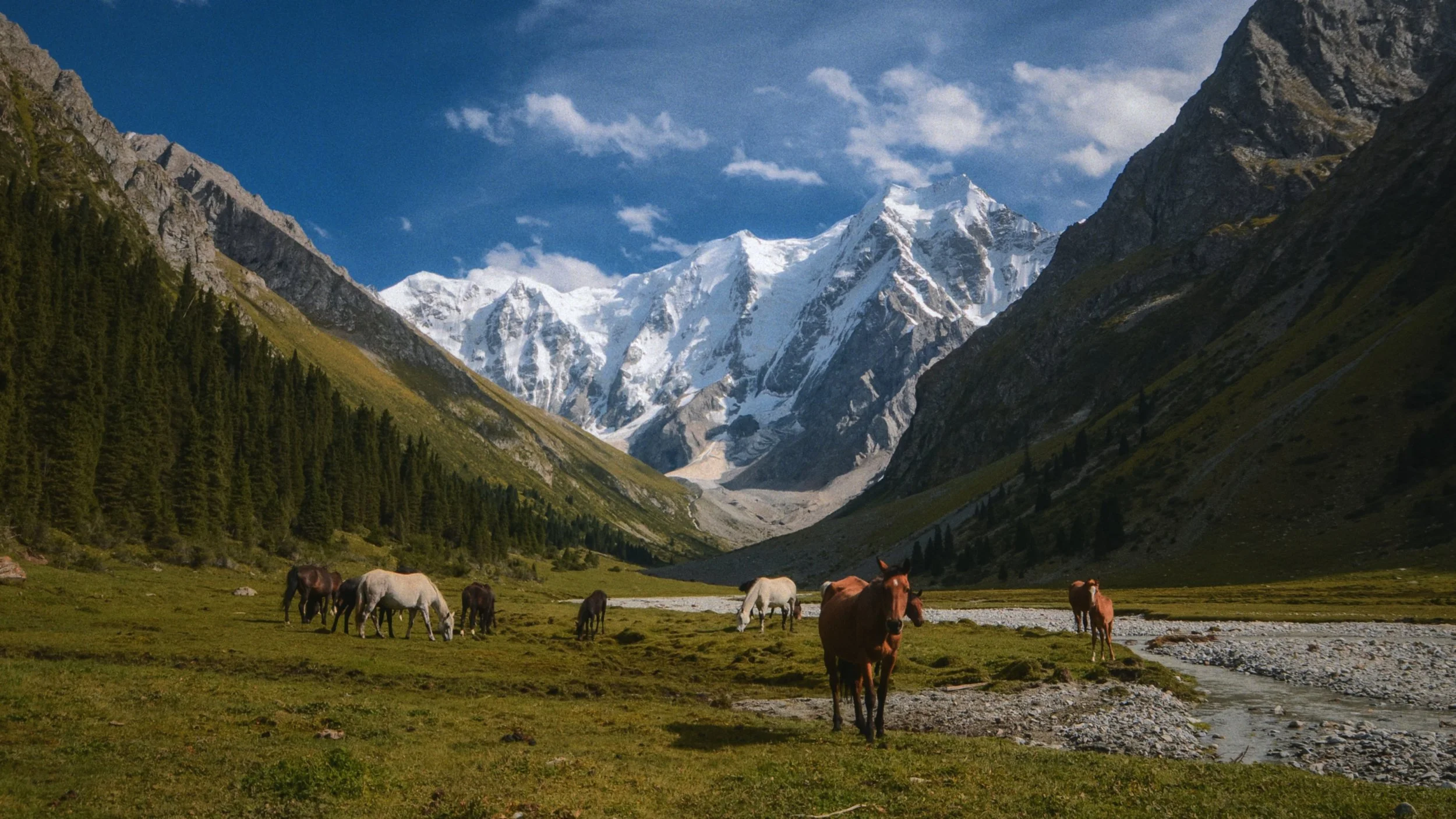
The massive surge in flight searches for Bishkek stems from a perfect storm of mainstream television exposure and a booming global appetite for untouched alpine adventures. A major driver was the capital's recent prominent feature on the BBC hit television series Race Across the World. The show thrust Kyrgyzstan's dramatic, raw scenery into the living rooms of millions, rebranding the Central Asian country as the ultimate frontier for off-grid travel.
Why travelers are booking right now
Bishkek serves as an exceptionally budget-friendly gateway that masterfully blends deep nomadic heritage, dramatic Soviet-era brutalist architecture, and massive mountain vistas.
Big mountain proximity: It is one of the few global capitals where you can leave a city center cafe and be hiking pristine glaciers or mountain gorges within 45 minutes.
The travel "dupe" trend: As mainstream European alpine destinations grow increasingly crowded and expensive, hikers are pivoting to the rugged Tian Shan range for world-class trekking at a fraction of the price.
Nomadic culture integration: The surge is also heavily tied to experiential travel, with people seeking authentic stays in traditional mountain yurt camps, horse riding through green valleys, and exploring vast alpine waters like Issyk-Kul Lake.
Essential starting points in Bishkek
Bishkek is a highly walkable city built on a strict Soviet grid system. To truly understand its rapid rise in global trends, you need to experience how it transitions from bustling Silk Road trade centers to stark Soviet monuments, all framed by 15,000-foot alpine peaks. Expanding on the essential starting points reveals exactly how to dive into the city's unique subcultures, hidden culinary scenes, and nearby wilderness.
Osh bazaar: the Silk Road sensory overload
Located on the western side of the city center, Osh Bazaar is one of Central Asia’s most iconic open-air markets. It functions less like a tourist attraction and more like the beating heart of local daily life. It is a labyrinth of sights and sounds. Walking through it, you will navigate narrow alleys packed with vendors selling everything from hand-carved traditional felt hats (kalpaks) to rows of colorful, aromatic spices. Head directly to the dairy pavilion to see massive mounds of kurut—salty, pungent, dried cheese balls that are a staple nomadic snack. Look for the bakery sections hidden near the back. Watch the bakers use clay tandoorovens to slap fresh, piping-hot lepeshka (circular, stamped Kyrgyz bread) onto the inner walls. Buying one directly from the oven costs mere pennies.
Ala-Too square & the Soviet core
This massive concrete expanse was built in 1984 to mark the 60th anniversary of the Kyrgyz Soviet Socialist Republic. Today, it serves as the ultimate civic gathering space. The center of the square features a massive bronze statue of Manas the Magnanimous, the legendary mythical hero of the Kyrgyz people. Behind him flies an enormous national flag, guarded around the clock by goose-stepping soldiers. Every hour, tourists and locals gather to watch the sharp, synchronized Changing of the Guard ceremony. Beneath the concrete, a network of underpasses connects the square to surrounding parks. These tunnels have transformed into vibrant underground art galleries and book stalls where local youth congregate.
The State History Museum
Reopened after a massive, multi-year renovation, this imposing white-marble cube sits directly on Ala-Too Square. It offers one of the most comprehensive looks into Central Asian heritage. The building itself is a masterpiece of late-Soviet architecture, complete with dramatic ceiling murals depicting socialist triumphs. Inside, the exhibits shift seamlessly from the ancient past to the modern day. You will find petroglyphs from the bronze age, beautifully preserved 19th-century nomadic horse regalia, intricately woven felt carpets (shyrdaks), and weapon collections from the era of Genghis Khan's expansion.
Panfilov Park: a nostalgic time capsule
Directly behind the government buildings lies Panfilov Park, a forested park dedicated to the 28 soldiers of a Bishkek infantry division who died fighting the Nazis outside Moscow. This park is a beloved local favorite that feels frozen in time. Shaded by massive elm trees, it operates a collection of vintage, brightly painted Soviet-era carnival rides. The standout feature is the 45-meter Ferris wheel. Taking a slow ride to the top provides a striking visual contrast: the rigid, grey brutalist blocks of the city center immediately giving way to the jagged, snow-capped peaks of the Kyrgyz Ala-Too mountain range towering in the background.
Ala Archa National Park: glacier trekking by noon
While technically located 25 miles south of the city lines, Ala Archa is culturally and logistically inseparable from the Bishkek experience. It is the primary reason adventure travelers are booking flights. The park cuts a dramatic V-shape into the mountains, following the rushing, glacial waters of the Ala Archa River. It encompasses everything from dense pine forests to stark alpine tundra and massive crumbling glaciers. Casual walkers can take the paved path that follows the riverbed. Hardcore trekkers head up the steep Ak-Sai Waterfall trail (about a 2-3 hour rigorous climb), which leads further up to the remote Ratsek Cabin—a high-altitude basecamp used by mountaineers preparing to summit the region's 4,000+ meter peaks.
Practical logistics for Kyrgyzstan
May and June offer lush green meadows, while July and August are ideal for high-altitude mountain trekking and clear alpine lake travel. The currency is the Som (KGS). Cards are widely accepted at modern establishments in Bishkek, but crisp cash is strictly essential the moment you travel into rural valleys or mountain yurt camps. Navigating the mountain passes is usually done via local off-road operators, who handle multi-day cross-country logistics, border permits, and nomadic homestays.
Visa requirements & entry
Visa-free entry: Citizens of over 60 countries (including the US, UK, Canada, EU nations, Australia, and New Zealand) can enter Kyrgyzstan visa-free for up to 60 days.
E-visa option: For nationalities requiring a visa, the official Kyrgyz Republic Ministry of Foreign Affairs Electronic Visa Portal allows straightforward online processing before arrival.
Registration rule: If staying longer than 60 days (or fewer for specific non-exempt nationalities), travelers must register their presence with the local state registry service (CBR) within their first few days.
Getting there & transit hubs
The main gateway: Manas International Airport (FRU), located about 25 minutes north of Bishkek, is the primary entry point.
Key airlines: Major entry routes flow through regional hubs. Frequent connections are operated by Flydubai (via Dubai), Turkish Airlines and Pegasus (via Istanbul), and Air Astana (via Almaty).
Land borders: The Ak-Zhol border crossing with Kazakhstan is heavily utilized by travelers taking a 4-hour shared taxi or minibus (marshrutka) between Almaty and Bishkek.
Best time to visit
Trekking & high alpine (July – August): This is the prime window. High-altitude mountain passes (above 3,000 meters) are completely clear of snow, alpine lakes like Ala-Kul are thawed, and yurt camps are fully operational.
Cultural & lower valleys (May – June & September): Ideal for exploring Bishkek and lower valleys without the intense mid-summer heat. Spring brings spectacular wildflower blooms across the steppes.
Winter sports (December – March): Karakol, a city on the eastern edge of Lake Issyk-Kul, transforms into a premier budget-friendly freeride ski and snowboard destination.
Money, currency & tipping
Local currency: The Kyrgyzstani Som (KGS).
Cash vs card: Bishkek is highly modernized; restaurants, supermarkets, and hotels widely accept Visa and Mastercard. However, cash is absolute king the moment you leave the capital. Yurt camps, mountain drivers, and rural guesthouses rarely accept cards.
ATMs & exchanging: ATMs are abundant in Bishkek (Demir Bank is highly reliable for international cards). If bringing foreign cash to exchange, bills must be pristine—banks and exchange booths routinely reject notes with tiny folds, tears, or stamps.
Local transportation
Yandex Go: The absolute best way to move around Bishkek. It functions exactly like Uber, is incredibly cheap, and eliminates language barriers or haggling with taxi drivers.
Marshrutkas: These local, fixed-route minibuses are the backbone of city and intercity transit. They cost pennies but can be crowded and require a basic understanding of Russian or Kyrgyz to navigate lines.
Shared taxis: For long-distance travel (e.g., Bishkek to Karakol or Osh), travelers head to the Western Bus Station to negotiate a seat in a shared vehicle.
Connectivity & communication
SIM cards: Getting a local SIM card is fast, incredibly cheap, and requires only your passport. The leading networks are O!, Beeline, and Mega. You can buy them directly at Manas Airport or any official store in downtown Bishkek.
Language: Kyrgyz is the state language, and Russian is the official language widely spoken across the capital and used in business. English is common among younger hospitality staff in Bishkek but very rare in rural mountain valleys. Downloading Russian and Kyrgyz offline data packs on Google Translate is highly recommended.