
Where to stay in Bali for relax (2026–2027): The off-grid relaxation itinerary
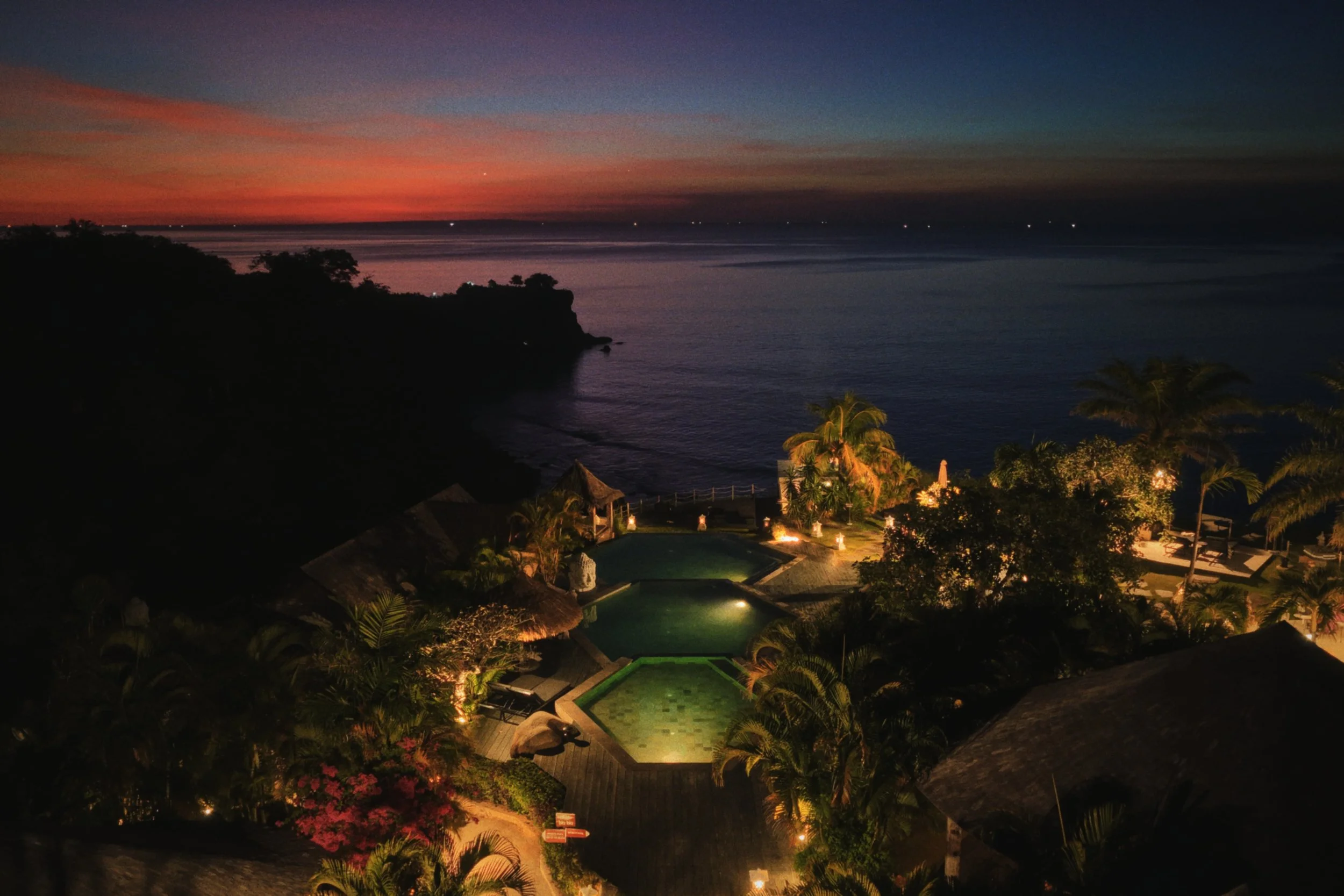
Forget everything you know about Bali’s crowded beach clubs and gridlocked coastal roads, and prepare to surrender your nervous system to an epic, 18-day eco-luxury odyssey engineered for absolute, transcendent stillness without draining your savings. This mind-blowing, budget-accessible route traces the island's ultimate frontiers of peace: you will awaken to a rushing jungle river inside a breathtaking bamboo villa in Payangan, catch jaw-dropping Indian Ocean sunsets from bohemian cliffside cabanas in Uluwatu, and unwind on the calm, swimmable white sands of a boutique beachfront hideaway in Nusa Dua. As the digital noise completely fades, the journey pulls you deeper into the slow, nostalgic rhythm of Candidasa, balances crisp mountain air with dramatic lake views from cozy cabins in Kintamani, and follows the sweeping golden fields down to the untouched black sands of Tianyar, before delivering the ultimate off-grid reset on the entirely car-free, crystalline coral shores of Gili Meno.
The master zen route & driving logistics
Moving between these regions is half the magic if you skip the main highways and instruct your driver to take the island's most stunning backcountry roads:
Leg 1: Airport — Payangan Jungle (Days 1–3): Skip central Denpasar traffic via Jalan Raya Mambal, cutting through quiet stone-carving villages and neon-green rice fields. Travel time: 1,5 hours.
Leg 2: Payangan — Uluwatu cliffs (Days 4–5): Cruise south through Sayan, climbing the steep limestone switchbacks of Jalan Labuan Sait on the Bukit Peninsula. Travel time: 2 hours.
Leg 3: Uluwatu — Nusa Dua coast (Days 6–7): A short, scenic drive across the southern ridge via Jalan Goa Gong for sweeping coastal views. Travel time: 35 minutes.
Leg 4: Nusa Dua — Candidasa (Days 8–9): Cruise the smooth Ida Bagus Mantra Bypass where glittering black sand and towering coconut groves run right along your window. Travel time: 1 hour, 15 minutes.
Leg 5: Candidasa — Kintamani highlands (Days 10–12): Climb north through Putung on narrow, jaw-dropping ridge roads flanked by deep, misty valleys on both sides. Travel time: 1,5 hours.
Leg 6: Kintamani — Tianyar savana (Days 13–15): A spectacular descent down the northern face of the volcano via the Songan Pass, watching the landscape shift to golden fields. Travel time: 1 Hour.
Leg 7: Tianyar — Gili Meno Island (Days 16–18): Drive south to Padangbai Harbor (1 hour) and catch a morning luxury fast boat straight out to the Gilis (1,5 hours on the water).
The 7 chapters of absolute sanctuary
Part 1: The deep jungle awakening (Days 1–3)
Where to stay: Hideout Eco Bamboo House Bali (Payangan borders). Completely open-air, barefoot luxury. Sleep in a custom-crafted bamboo masterpiece nestled against a roaring jungle river. Ditch your phone. Spend three days listening to the canopy, soaking in a private outdoor hot tub, and letting the jungle humidity melt away your travel exhaustion.
Where to eat: Warung Makan Bu Sukra. A hidden village gem. Order the fiery Nasi Ayam Betutu (slow-cooked, intensely spiced shredded chicken).
Part 2: The cliffside vistas (Days 4–5)
Where to stay: Biu Biu Resort Bali (Uluwatu). Rustic limestone eco-cabanas perched directly on the dramatic cliffs of Balangan Beach. Five-star ocean vistas with a laid-back, bohemian energy. Watch the sun drop straight into the Indian Ocean from the cliff-edge infinity pool. Book an outdoor massage where the only soundtrack is the heavy ocean swell below.
Where to eat: Warung Local. A clean, modern Nasi Campur (mixed rice) joint. Point through the glass at beef rendang, and fresh Sambal Matah.
Part 3: The ocean rest (Days 6–7)
Where to stay: Sadara Resort (Nusa Dua). Peaceful beachfront living without the mega-resort crowds. Classic Balinese architecture surrounded by lush lawns opening onto calm, swimmable white sand. Arrange a quiet morning breakfast directly on the sand. Spend your days reading under the shade of a sea-almond tree and walking the calm coastline at sunrise.
Where to eat: Warung Dobiel. The most legendary, unpretentious spot in the south.
Part 4: The forgotten east coast (Days 8–9)
Where to stay: Sea Breeze Candidasa or Ashyana Candidasa. Genuine, old-school Bali tranquility. These boutique oceanfront properties offer expansive sea views at a fraction of the cost of mainstream tourist hubs. Fall asleep to the actual sound of the tide lapping the shore. Spend an afternoon wandering the nearby ancient water palace of Tirta Gangga.
Where to eat: Warung Sunset Candidasa. A relaxed beachfront shack. Order the Ikan Bakar (fresh local fish grilled over real coconut husks) with your toes in the sand.
Part 5: The volcanic lakes & hot springs (Days 10–12)
Where to stay: Kamani Cabin or Enjung Segara (Kintamani). Cozy, crisp mountain cabin time. These A-frame glamping properties sit directly on the edge of Lake Batur, offering direct views of the massive volcano and its raw black lava fields. Skip the exhausting sunrise trek crowds. Sleep in, enjoy the cool 15°C (59°F) highland air, and spend afternoons soaking in natural volcanic hot springs.
Where to eat: Warung Mujair Nyat-Nyat Pak Manto. They specialize in lake-harvested tilapia (Mujair) stewed in a rich, aromatic paste of turmeric, galangal, and garlic.
Part 6: The exotic savana & deep coast (Days 13–15)
Where to stay: Vela Tianyar Boutique Resort or Bali Umah Tinjung (Tianyar). Untouched, golden savanna landscapes meeting a dramatic, isolated coastline right under the massive gaze of Mount Agung. Take a morning walk into Savana Tianyar to watch wild horses grazing against the volcanic backdrop. Spend your evenings in absolute environmental silence.
Where to eat: Warung Makan Jempiring. Ask the local family running it for Tipat Cantok — rice cakes and fresh vegetables crushed by hand in a stone mortar with a rich, garlic-heavy peanut sauce.
Part 7: The car-free digital detox (Days 16–18)
Where to stay: MAHMAYA Gili Meno. True castaway freedom. Located on a tiny coral island with absolutely zero motorized vehicles — only the sound of bicycle bells and the ocean. Step out of your room directly onto powdery white sand. Spend your final days swimming alongside resident sea turtles right off the shoreline and disconnecting completely.
Where to eat: MAHMAYA Beach Restaurant. Dine barefoot by candlelight right at the water’s edge, eating fresh, sustainably caught grilled seafood under the stars.
Essential road trip travel hacks
The bulletproof warung strategy
High turnover only: Eat where you see locals or drivers gathering. This guarantees the food is freshly cooked and hasn't been sitting out.
Sanitize first: Indonesian cash bills carry more bacteria than the food stalls. Always wash or sanitize your hands after paying and before you eat with your hands.
The "Fire & Ice" packing rule
For the volcano: Pack a lightweight windbreaker, warm jacket & sweatpants, and socks. Highland temperatures drop drastically after sunset.
For the sea: Bring loose linen clothing, polarized sunglasses, and strictly reef-safe sunscreen to protect the fragile marine ecosystems and sea turtles in Gili Meno.
The 2026–2027 tech blueprint
Pre-load your eSIM: Skip the chaotic airport phone stalls. Purchase an Indonesian eSIM online via apps like Airalo or Klook before landing. Choose the Telkomsel network for the most reliable coverage in deep mountain gaps like Kintamani and Tianyar.
Offline mapping: Download your entire Bali route on Google Maps while connected to hotel Wi-Fi. Cell signals will drop entirely along the volcanic ridges.
A flawless digital detox ironically requires rock-solid digital preparation. To guarantee you stay seamlessly connected across misty calderas and car-free islands, the 2026–2027 Bali tech blueprint must be elevated into an essential guide. Here is the deep-dive expansion to future-proof your road trip.
The 2026–2027 carrier landscape: Mergers & dead zones
The Indonesian telecom landscape has evolved dramatically, shifting network dynamics across the island. The Telkomsel monopoly in deep nature: Telkomsel controls roughly 55% of the market and remains the gold standard for regional travelers. In deep valley hideaways (Payangan), mountain passes (Kintamani), and remote coastlines (Tianyar), Telkomsel is the only carrier that maintains a stable 4G connection.
The smart eSIM strategy vs the airport trap
Do not waste your first two hours standing in a humid line at Denpasar Airport (DPS) to register a physical SIM. Indonesia enforces a strict IMEI registration law. If you buy a regular local physical SIM card from a random roadside shop, it will be instantly blocked unless your phone’s international serial number (IMEI) is formally registered against your passport data.
By utilizing a verified tourist eSIM platforms like Airalo or Klook you can securely pre-submit your passport info and eKYC requirements online days before flying. You receive a digital QR code via email, scan it while sitting at your departure gate, and seamlessly transition to local data the exact second your plane touches down in Denpasar.
App architecture for remote travel
Ride-hailing & logistics: Download both Grab and Gojek. While these apps are perfect for tracking private drivers or ordering food in Ubud and Nusa Dua.
Digital currency (QRIS): Bali has rapidly transitioned to a cashless framework via QRIS (Quick Response Code Indonesian Standard). Even tiny warungs in Tianyar frequently accept QRIS codes. Link your international travel cards to multi-currency digital wallets like Revolut or Wise to pay via scanning codes, but always carry roughly IDR 300,000 (~$20 USD) in crisp cash notes for remote beach parking or fresh coconuts.
Navigation safety: Google Maps works well in major hubs, but it frequently attempts to route vehicles down terrifyingly narrow pedestrian paths or crumbling cliff staircases in rural Bali. Cross-reference your paths with Organic Maps or Maps.me, keeping a fully offline map layer downloaded onto your hard drive for the mountainous north.
Hard-tech packing essentials for the field
The power bank rule: Constant roaming between mountain towers in Kintamani drains smartphone batteries twice as fast. Pack a heavy-duty 10-20,000mAh Power Bank (like Anker or Baseus) directly in your carry-on luggage (Indonesian airport security will confiscate power banks if the capacity markings are scratched off or over 30,000mAh).
The plug profile: Bali predominantly uses European-style two-pin sockets running at 220V/50Hz. Bring a rugged universal adapter equipped with multiple USB-C PD (Power Delivery) slots to fast-charge your phone and camera gear simultaneously.